
What Actually Happens When We Reupholster Your Furniture
- Jun 18
- 3 min read
Most people who bring a sofa or armchair into our workshop have never seen what's under the fabric. They know the piece is loved, or it's a family heirloom, or it's just too good a frame to throw away — and they trust us with the rest. So we thought it'd be useful to pull back the curtain and walk through what actually happens between drop-off and collection.
1. The assessment
Before any work starts, we go over the piece properly. That means checking the frame for structural issues, looking at the existing springs and webbing, and talking through what you actually want from it — are you matching an existing colour scheme, going for something completely different, restoring it as close to original as possible? This is also where we talk fabric: yours (COM) or one of ours, durability needs if you've got kids or pets, and whether it needs to meet fire-retardant standards (Crib 5 / BS 5852), which matters more than people realise if the piece is going into a commercial space.
2. Stripping back to the frame
Every layer comes off — old fabric, old foam, old wadding — until we're down to bare wood. This is the point where you really find out what you're working with. Sometimes a frame that looked fine from the outside has a cracked joint or worn-out webbing underneath. It's also the only honest way to get accurate fabric quantities, rather than guessing from the outside.
3. Frame and structural repairs
Any loose joints get re-glued and reinforced, broken rails get replaced, and if springs have gone or webbing has sagged, that gets redone here too. This step doesn't show up in the finished piece, but it's the difference between furniture that lasts another twenty years and furniture that looks fine for six months and then sags.
4. Padding and foam
New foam goes in cut to the right density for how the piece is used — firmer for a dining chair seat, softer for a lounge cushion. We wrap it in wadding (Dacron) to soften the edges and stop the fabric from showing every seam in the foam underneath. This is also where cushion fillings get sorted, whether that's foam, feather, or a foam-and-feather wrap.
5. Cutting and pattern matching
Fabric gets cut to pattern, with extra care taken on anything with a repeat — stripes, checks, large florals — so the pattern lines up across cushions and arms rather than looking slightly off. This step takes longer than people expect, but it's the kind of detail that's obvious the moment it's done badly.
6. Upholstering
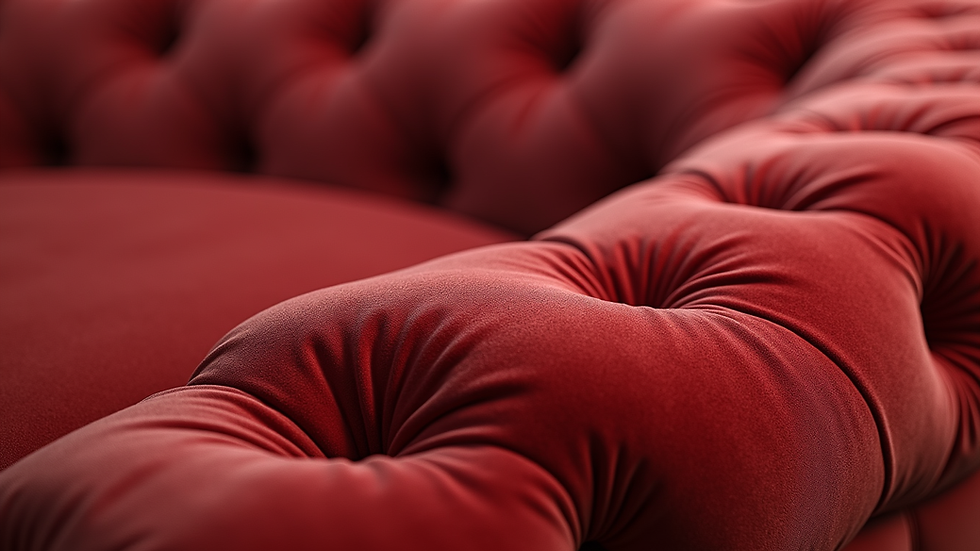
The fabric goes on, pulled and tensioned by hand, tacked or stapled into place, with seams and joins positioned where they'll be least visible. Any piping, decorative trim, or buttoning gets worked in at this stage too — deep buttoning in particular is a slow, deliberate process, not something that can be rushed.
7. Finishing and quality check
Final trims, any zips or closures, a full check over for tension, symmetry, and finish, and then a clean before it goes back to you. We're looking at it the way you will — sitting in it, checking it from across the room, not just up close.
8. Delivery (or collection)
Local collection and delivery, or you're welcome to drop off and pick up yourself. Either way, we'll talk you through anything worth knowing about caring for the new fabric before it leaves the workshop.
That's the short version of a process that, depending on the piece, can take anywhere from a few days to a few weeks. If you've got something in mind — a sofa that's been in the family for years, a chair that needs new life — get in touch and we'll talk through what it needs.


Comments